In the final days of World War II, American soldiers crossed into territory still held by Nazi Germany to save hundreds of rare horses. What followed brought together U.S. cavalrymen, German soldiers, liberated prisoners of war and civilians in one of the war's most unusual missions.
By late April 1945, the war in Europe was almost over. Adolf Hitler's regime was collapsing, American forces were advancing through Bavaria from the west, and the Soviet Red Army was moving through Czechoslovakia from the east. Germany would surrender within days, but between the two armies there were still armed German units, displaced civilians, prisoners of war and pockets of fanatical resistance.
There were also hundreds of horses.
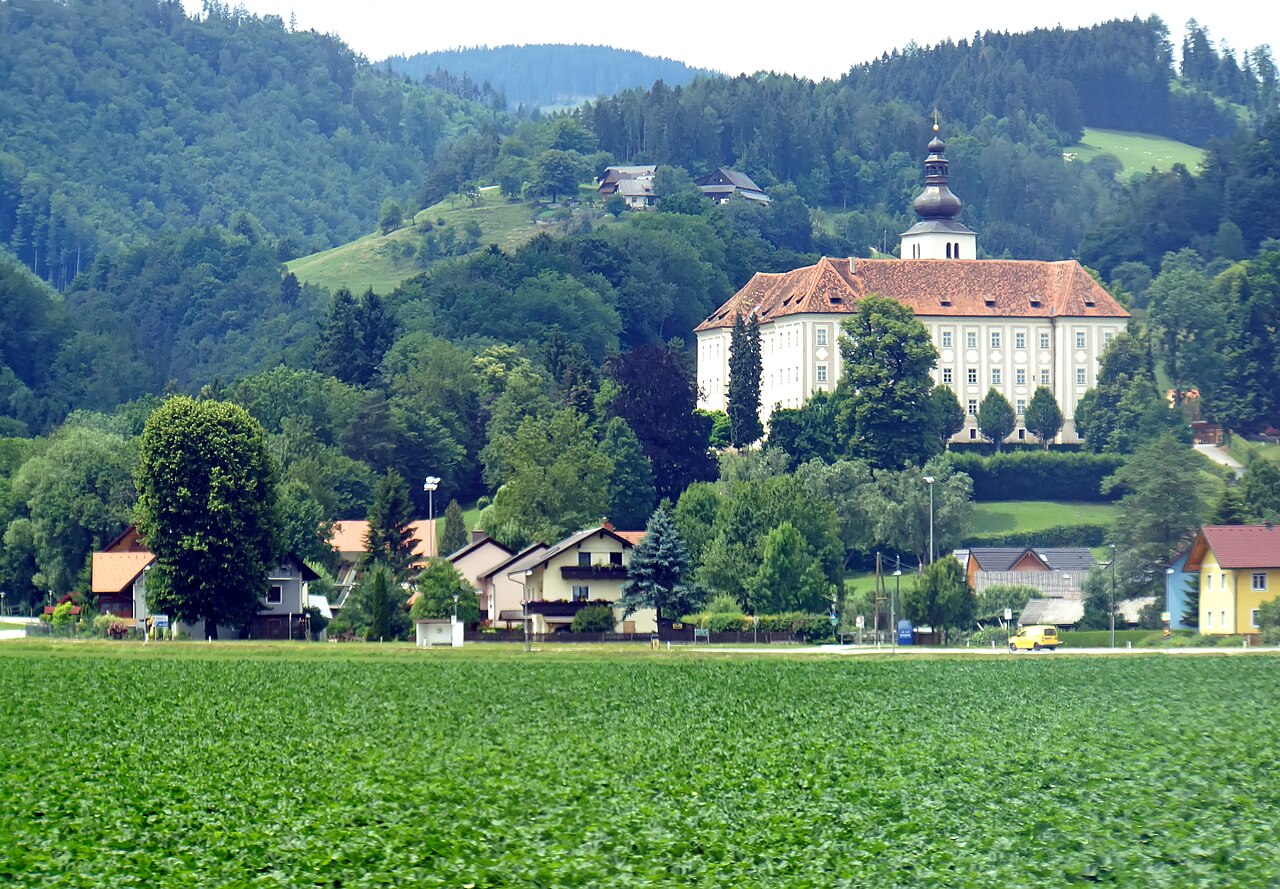
At a military stud farm near Hostau — today Hostouň in the Czech Republic — the Germans had assembled one of the most valuable collections of horses in Europe. The herd included Arabians, thoroughbreds and other prized animals, but its greatest treasure was a large part of the Lipizzaner breeding stock connected to Austria's famous Spanish Riding School.
The Lipizzaners represented centuries of careful breeding. Their bloodlines reached back to the Habsburg Empire and the sixteenth century. The stallions of the Spanish Riding School were famous for classical dressage and difficult movements sometimes called the "airs above the ground." The horses at Hostau, particularly the mares and their foals, were essential to the breed's future. Losing them could have caused permanent damage to the Lipizzaner bloodlines.
As two enormous armies approached, the people responsible for the horses realized that their survival was far from certain. Their solution was extraordinary: German officers would ask the Americans to come and get them.
How the horses reached Hostau
War had placed the Lipizzaners in danger long before 1945. As Allied bombing intensified, Nazi authorities moved valuable horses away from threatened areas and concentrated breeding animals at Hostau, in the Sudetenland region of occupied Czechoslovakia.
Among them were Lipizzaner mares from the Austrian federal stud at Piber, the breeding center that supplied stallions to the Spanish Riding School in Vienna. Horses taken from other parts of Europe were also brought to the farm. Nazi breeding officials attempted to control and consolidate important bloodlines under a program influenced by the regime's racial ideology.
The highly trained performance stallions followed a different route. Colonel Alois Podhajsky, director of the Spanish Riding School, evacuated them from Vienna to St. Martin in Upper Austria early in 1945. This detail matters because popular versions of the story often place all the horses together. In reality, the famous riding-school stallions were in Austria, while much of the breeding herd was at Hostau.
By April, the Hostau complex held roughly 1,200 horses according to commonly cited military accounts, including approximately 375 Lipizzaners. It also held hundreds of Allied prisoners of war who had been used as laborers.
The Germans make contact
The officers and veterinarians at Hostau were caught between the advancing Americans and Soviets. They feared that the horses could be scattered, overworked, stolen or slaughtered amid the hunger and disorder accompanying the Soviet advance. Stories about what Soviet troops would certainly have done are sometimes presented as established fact; in reality, no one could know the horses' exact fate. What was beyond doubt was that a large, vulnerable herd in a collapsing war zone faced a serious risk.
Lieutenant Colonel Hubert Rudofsky, the German officer overseeing the stud, and Lieutenant Colonel Walter Holters, a Luftwaffe intelligence officer stranded in the area, began seeking a way to surrender the farm and its horses to the Americans. Holters helped establish contact with the U.S. 2nd Cavalry Group, part of General George S. Patton's Third Army.
The 2nd Cavalry was cavalry largely in name by 1945. It was a fast, mechanized reconnaissance formation equipped with armored cars, light tanks and self-propelled weapons. Nevertheless, many of its officers had grown up in the Army's mounted tradition and understood the importance — and the practical difficulties — of moving a huge herd.
Colonel Charles H. Reed, commander of the group, decided to act. Waiting for the front to settle could mean arriving too late.
An American force crosses the lines
A task force of roughly 325 men was assembled under Major Robert P. Andrews. It included reconnaissance troops, M8 armored cars, light tanks and supporting weapons. Captain Thomas M. Stewart, a cavalry officer and experienced horseman, would play a central part in the operation.
The mission was dangerous. Hostau lay about 20 miles beyond the American position, across territory that had not formally surrendered. The agreement made by officers at the farm did not bind every German unit between the Americans and Hostau. The task force therefore had to be ready to fight its way through.
On April 28, 1945, the Americans advanced toward the stud. After overcoming resistance along the route, they reached and secured the farm. The German personnel there surrendered and accepted American authority.
Reaching Hostau, however, was only the beginning. The Americans had too few men to guard the area, care for the horses and move the entire herd. They recruited help from the newly liberated prisoners of war, who included British, French, Polish, Serbian and New Zealand personnel. German soldiers who had surrendered also volunteered or were assigned to help. Those permitted to carry weapons did so under American command.
For a brief and remarkable period, soldiers who had recently been enemies worked on the same side.
A final battle
The area was not yet peaceful. Armed Waffen-SS units remained nearby, and unlike many regular German troops who were trying to surrender to the Western Allies, some SS formations continued fighting.
The improvised force at Hostau reportedly came under attack more than once. American soldiers, armed German personnel under U.S. control, former prisoners and other volunteers defended the farm together. Several men were wounded. Two American cavalrymen — Private First Class Raymond E. Manz and Technician Fifth Grade Owen W. Sutton — were killed during the wider operation and are commemorated near Hostouň.
This fighting gave Operation Cowboy its most astonishing image: Americans and Germans, still technically enemies, defending the same position against troops determined to continue the war. It was not a reconciliation between the United States and Nazi Germany. The German participants had surrendered and were serving under American authority. Even so, it remains one of the rare moments in the European war when members of the U.S. Army and former Wehrmacht personnel fought alongside one another.
Moving the herd
The next challenge was logistical. There were many more horses than soldiers. Some mares were pregnant; others had recently delivered foals. The animals varied greatly in health, temperament and training. A few could be transported in available vehicles, but most had to travel on foot.
The men gathered saddles, bridles, ropes, wagons and every usable piece of equipment they could find. Experienced riders mounted some horses and used them to control the herd. Other animals were led or driven in large groups. Foals had to remain close to their mothers, and the entire column could move only as fast as its weakest members.
The sight must have been extraordinary: armored scout cars and light tanks escorting columns of mares and foals; American cavalrymen riding beside German soldiers; former prisoners helping control the animals; civilians and refugees moving with them as the Third Reich disintegrated around them.
The immediate action secured the farm at the end of April. The larger evacuation unfolded over the following days. In May, the horses were moved westward out of the area designated for Soviet occupation and into territory controlled by the Americans. Accounts vary over the precise number moved at each stage, which is why it is safer to say that the operation saved hundreds of Lipizzaners and approximately 1,200 horses in total rather than attach that entire figure to a single drive.
Patton's real role
General George S. Patton is often portrayed as personally launching the rescue after watching the white stallions perform. The truth is more complicated — and, in some ways, more interesting.
Patton was an accomplished horseman who had competed in the modern pentathlon at the 1912 Olympic Games. He respected cavalry traditions and understood the cultural value of the Lipizzaners. But the operation at Hostau was already underway before his famous encounter with the Spanish Riding School.
On May 7, 1945, Colonel Podhajsky arranged a performance by the school's stallions at St. Martin for Patton and U.S. Undersecretary of War Robert P. Patterson. Afterward, Podhajsky requested American protection for the Spanish Riding School and assistance in reuniting its stallions with the breeding stock taken to Czechoslovakia. Patton agreed to place the school under American protection and supported the broader effort.
Patton's authority helped secure the horses' future, but the decision to enter Hostau grew from the initiative of officers closer to the scene — especially Colonel Reed and the men of the 2nd Cavalry Group. The popular version blends two connected events: the seizure and evacuation of the breeding herd from Hostau, and the protection of the riding-school stallions at St. Martin.
After the rescue
Saving the horses from the battlefield did not immediately restore their old lives. Europe was divided into occupation zones, and Piber initially lay in the Soviet zone of Austria. Returning the breeding herd therefore required years of negotiation and temporary arrangements.
The horses were housed at several locations under Allied protection. Some animals that had been taken from other European countries were eventually returned. The Austrian Lipizzaner breeding stock went back to Piber in 1952. The Spanish Riding School returned permanently to its historic home in Vienna in 1955.
The breed survived, as did the traditions of the Spanish Riding School.
History and legend
The rescue became widely known through the 1963 Walt Disney film Miracle of the White Stallions. The movie helped preserve the story, but it rearranged the chronology and gave Patton a more direct role in setting the Hostau mission in motion. The nickname "Operation Cowboy" also appears to have become popular in later retellings rather than serving as the mission's formal contemporary code name.
The true story needs little embellishment. In the final days of the most destructive war in history, a German officer crossed enemy lines with an unusual request. American soldiers accepted the risk. Former enemies, freed prisoners and civilians worked together. Men died while protecting animals that had no understanding of borders, ideologies or surrender agreements.
They saved more than a collection of beautiful horses. They preserved centuries of breeding, an important European cultural tradition and the future of one of the world's most recognizable horse breeds.
That is why Operation Cowboy remains such a powerful story. At a moment when nearly everything around them was being destroyed, a small group of people chose to save something irreplaceable.
Sources & further reading
- Army Historical Foundation, "Operation Cowboy" — armyhistory.org/operation-cowboy
- U.S. Army, "2CR, Czech Republic Remember Operation Cowboy" — army.mil/article/167131
- Spanish Riding School, "History of the Spanish Riding School" — srs.at/en/about-us/geschichte
- U.S. Army University Press, review of Mark Felton's Ghost Riders — armyupress.army.mil
- Karen Jensen, "How General Patton and Some Unlikely Allies Saved Austria's Fabled White Horses," HistoryNet — historynet.com/patton-saves-austrias-white-horses
Editorial note: Contemporary reports and later histories differ on several details, including the number of horses moved during individual stages and the exact scale of the fighting. This article uses approximate figures and distinguishes documented events from later popular retellings.